MIME Solutions Limited

Lean Six Sigma

Latest Books

Home About MIME Project Solutions Business Solutions People Solutions News e-Mail Us PM Toolkit Lean Six Sigma Training

What is Lean Six Sigma? (LSS)

Benefits of LSS

LSS Deployment

LSS Methodology

LSS Services


What is Lean Six Sigma? (LSS)

What is Lean?

A 'lean' process is one which is focused on generating value for its customer. The flow of value through the process is defined and tracked while waste in all its forms is removed.

Value

Value-added activity

An activity that transforms or shapes material or information to meet customer value requirement

Waste

Non value-added activity

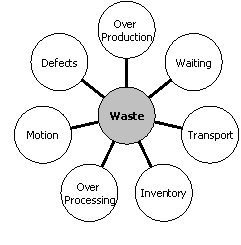
Those activities that take time or resources, but do not add to customer value. There are seven types of waste


The Seven Types of Waste

Type of Waste

Description

Over Production

Product made for no specific customer

Waiting

Product waiting to be processed

Transport

Moving the product to several locations

Inventory

Storing product costs money

Over processing

When a process step does not add value

Motion

The excessive movement of people

Defects

Errors during the process

What is Six Sigma?

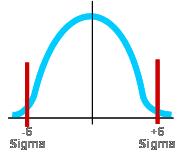
A six sigma process is one which generates only three defects per million parts produced by the process. It measures, reduces and tracks variation ensuring the processes operate as intended. Its principles can be used both within manufacturing and service environments.

Defects

DPMO

Three defects per million opportunities (DPMO) is equivalent to 99.9997% of product being within specification

Variation

Standard deviation

A DPMO of three is equivalent to six sigma


How Lean and Six Sigma Fit Together

Of the many ways that lean six sigma could be explained, the following three definitions are typical:

Lean and Six Sigma (1)

Lean and Six Sigma (2)

A Lean Six Sigma Process

  • Lean makes sure we have the right activities

  • Six sigma makes sure we do these activities right every time

  • Lean defines value flow

  • Six sigma makes value flow smoothly


  • Is made up of value-adding activities which flow within a controlled variation

  • Has minimal wasteful activities and produces minimal defects

Back to Top

Benefits of LSS

The benefits of the application of lean six sigma are well documented:

  • decreased lead times for customers
  • reduced inventories for manufacturers
  • improved knowledge management
  • more robust processes (as measured by fewer errors and therefore less rework)

Lean can be applied to all aspects of the supply chain, and should be, if the maximum benefits within the organisation are to be sustainably realised. There are many tangible benefits associated with lean business processes. A lean business process will be faster, eg. the speed of response to a request for the business process will be faster. As most business processes are linked to organisational supply chains, then this can deliver significant financial benefit to a company.

Lean thinking forces us to review the whole supply chain in which the business process sits, and this frequently reveals bottlenecks, pockets of inefficiency and waste.

Back to Top

LSS Deployment

Lean six sigma is applicable to all processes, both manufacturing and transactional. The application of lean six sigma is a data rational, structured approach and organisations need to question whether they know enough about

  • Their processes - and their capability
  • Their customers - and what they value
  • Their business - and how it operates

in order to apply lean six sigma.

Sustainable deployment of lean six sigma can be described by three principles:

  • Level of training - there are many ways to build up lean six sigma competence in an organisation. Too fast and individuals are left with high expectations and nowhere to use their training. Too slow and the organisation is left reliant on external support and a few internal individuals.

  •  Level of external consultancy support - without expert facilitation a lean six sigma deployment programme can make many costly mistakes. However, extensive and lengthy use of external support can leave an organisation dependent upon that support - this is not sustainable.

  • Level of change - the biggest mistakes made within deployment programmes both concern making too much change too early. Initiating one very large improvement project or many small and medium sized ones can have the same result - change overload, extended improvement project time-lines, lack of change sustainability and increased resistance to change for future projects.

Back to Top

LSS Methodology

The normal methodology for the execution of LSS projects is the DMAIC framework:

D = Define

M = Measure

A = Analyse

I = Improve

C = Control

This is a systematic methodology requiring an experienced facilitator who will guide a team of individuals experienced in the business process being reviewed. It focuses the project on what customers value, determines how this can be measured and ensures that the value is delivered.

This is only a framework and it is up to the facilitator to choose the most appropriate tools to identify and eliminate waste and to identify and reduce variation.

Back to Top

LSS Services

Through use of MIME and Associate resources the following Lean Six Sigma services can be offered:

1.  Organisational LSS Deployment

  • Development of a customised deployment strategy
  • Set-up of an LSS programme
  • Selection of potential black-belts
  • Management of organisational events (kaizen, value-stream mapping, baselining, etc)
  • Selection of LSS projects
  • LSS programme management
  • Development of an LSS Communications Plan
  • LSS deployment health-check
  • LSS organisational sustainability reviews

2.  Lean Six Sigma Training and Mentoring

  • Development of an LSS Training Hierarchy
  • Provision of awareness, Champion and leadership training
  • Access to certified yellow, green, black and master black belt training (see LSS organisations below)
  • Mentoring of yellow, green and black belts (through training to certification)
  • Delivery of non certified yellow, green and black belt training
  • LSS capability profiling – actual, target, and plan to reduce gaps, etc
  • Mentoring of certified yellow, green and black belts (to support further development of capability, possibly to Master Black Belt level)
  • Provision of training and coaching to support data collection and analysis planning (six sigma tools and processes; selection and use)
  • Specific LSS tool coaching

3.  LSS Project Management

  • LSS project set-up
  • LSS project health-checks
  • LSS project reviews (at key points in the DMAIC process)
  • Design and facilitation of LSS project based events (baseline, value stream map, kaizen, voice of the customer, etc)
  • Management of LSS projects (delivery of sustainable change through use of LSS)

4. LSS Organisations

Provision of certified yellow, green and black belt LSS training

Achieve competitive excellence with Air Academy Associates, a leading provider of  continuous and breakthrough improvement methods to industry since 1990

Back to Top

Copyright © MIME Solutions Ltd. 2007 all rights reserved